
 Elaine Miller is a pelvic health physiotherapist, award-winning comedian and women's health campaigner with a passion for breaking down taboos around intimate health. Elaine combines evidence-based advice with humour to help women better understand common but often overlooked conditions affecting the pelvic floor and vulval health. In this guest article. Elaine explains what vulval dermatitis is, what causes it and how you can manage the symptoms. You can keep up to date with Elaine's writing on women’s health and women’s issues at Venus Envy.
Vulval dermatitis
The skin on your vulva (the external part of your genitals) is just as vulnerable to irritation as the skin anywhere else on your body. Vulvas are wet and warm and so managing irritation can take longer than somewhere you can keep cool and dry.
What is vulval dermatitis?
 The soft skin around the vaginal opening is more vulnerable to damage than other skin on your body. Symptoms can include:
- itching
- burning
- pain
- soreness
- irritation
If you have a look in a mirror you might see a rash, weeping, red patches and maybe thin cracks. These can be similar in appearance, but more subtle than the appearance of eczema on other body parts. Many women mistake their symptoms for thrush and self manage, often for a long time, over-the-counter anti-fungal treatments which won’t help and this can be very frustrating.
What causes it?
 Vulval skin is also exposed to more irritants than skin - sweat, vaginal secretions, pee or poo and sperm can all be bothersome. Vulvas also have to put up with a lot of rubbing from clothing (especially tight, tiny or sweaty clothing) pads, tights, and from sexual activity. Sex can be painful if your skin is sore - it is possibly not the sexual activity that’s the problem but the irritated skin that’s the issue.
If your skin is generally sensitive to wool clothing, bubble baths, cleaning products etc and you also suffer from hay-fever, asthma or eczema then you may be more likely to have vulval symptoms too. Perimenopausal and postmenopausal women are especially prone to vulval dermatitis, when reduced oestrogen levels have often already caused the skin to become thinner and more prone to dryness and atrophy.
How do I manage vulval dermatitis?
Dermatitis is made worse with heat, dampness and friction. Finding and removing those factors can make a huge differences to your symptoms. Have a think about the products you're using too. Many can contain potential allergens that you wouldn't normally think about. Does your toilet paper contain dyes? Do you use soap, bath oil, talcum powder, cleanser, shampoos or body lotion? Almost all contain perfumes and harsh preservatives. Do you use latex condoms?
- You must cut out all soap, bubble bath and perfume. It is important to use a soap substitute from your chemist or GP, such as an emollient.
- Wash your vulva once a day without scrubbing, and be careful to avoid the vaginal opening. Pat dry or use a hairdryer on a cool setting.
- Wear white cotton underwear that is not too tight and don’t wear underwear at night.
- Avoid tights, trousers, g-strings and tight jeans. Try using tampons instead of sanitary pads, and, if you use pads then avoid those with colour patterns or fragrances.
- Try not to scratch as the vulval skin is very fragile, particularly after menopause. Small tears or cuts can become infected and make things worse.
- A frozen or chilled damp sanitary towel can be soothing if the itch is troublesome. Speak to your pharmacist about anti-histamine medication if the itch is severe.
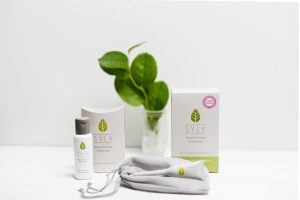
Some personal lubricants and vaginal moisturisers contain harsh preservatives or even additives that cause tingling. Sylk is a pH neutral, hypo-allergenic, non-irritating lubricant that can be used as a moisturiser too. You can use it little and often directly on the irritated skin. It can be helpful to put a small amount of Sylk on unscented toilet tissue before wiping to reduce dragging and scratching. You can order your free sample here
When should I see my GP?
 If your symptoms persist, keep returning, become severe, or you're unsure of the cause, arrange an appointment with your GP or a healthcare professional. It can take a long time for vulval dermatitis to settle. Your doctor will have other treatments available to help and can refer you to a specialist in vulval dermatology if required.